A toilet that keeps running is more than an annoying background noise. It can waste a surprising amount of water, push up a metered water bill, and sometimes point to a fault inside the cistern that will only get worse if ignored. If you have found yourself wondering why is my toilet running long after the flush, the good news is that many causes are simple to identify.
Most running toilet problems come from one of three areas: the flush valve, the fill valve, or the water level inside the cistern. In older toilets, the issue may involve a flapper, siphon, handle, or chain. In many modern UK toilets, especially dual-flush models, it is often a worn seal, a sticking button, or a float that is set too high.
This guide explains how to fix a running toilet safely, what to check first, and when it is better to call a qualified plumber.
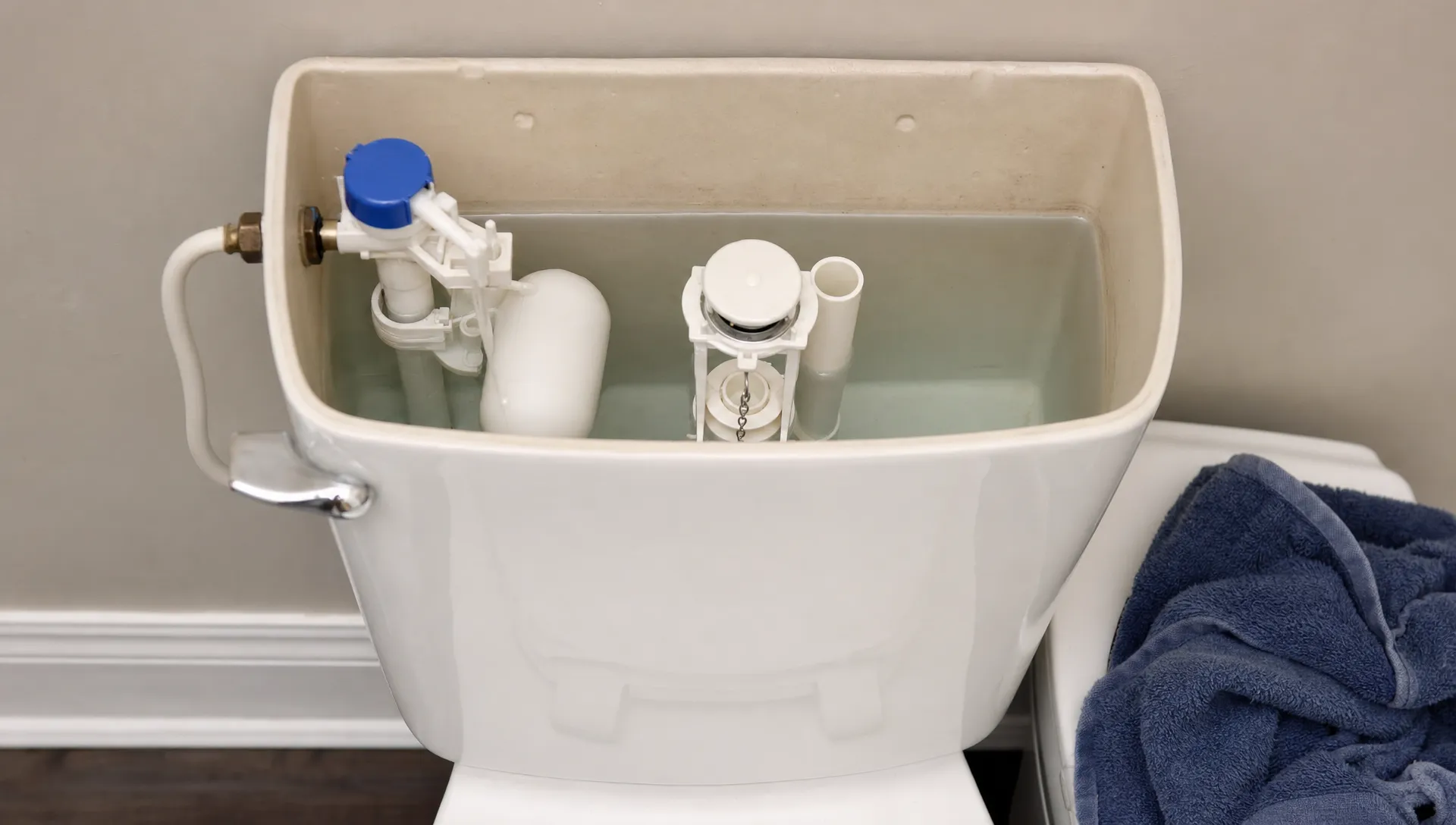
How a toilet cistern should work
To understand why your toilet keeps running, it helps to know what should happen after a normal flush.
When you press the handle or push button, water stored in the cistern is released into the toilet pan. This creates the flush. Once the cistern empties, the flush mechanism should close again so water cannot continue flowing into the pan.
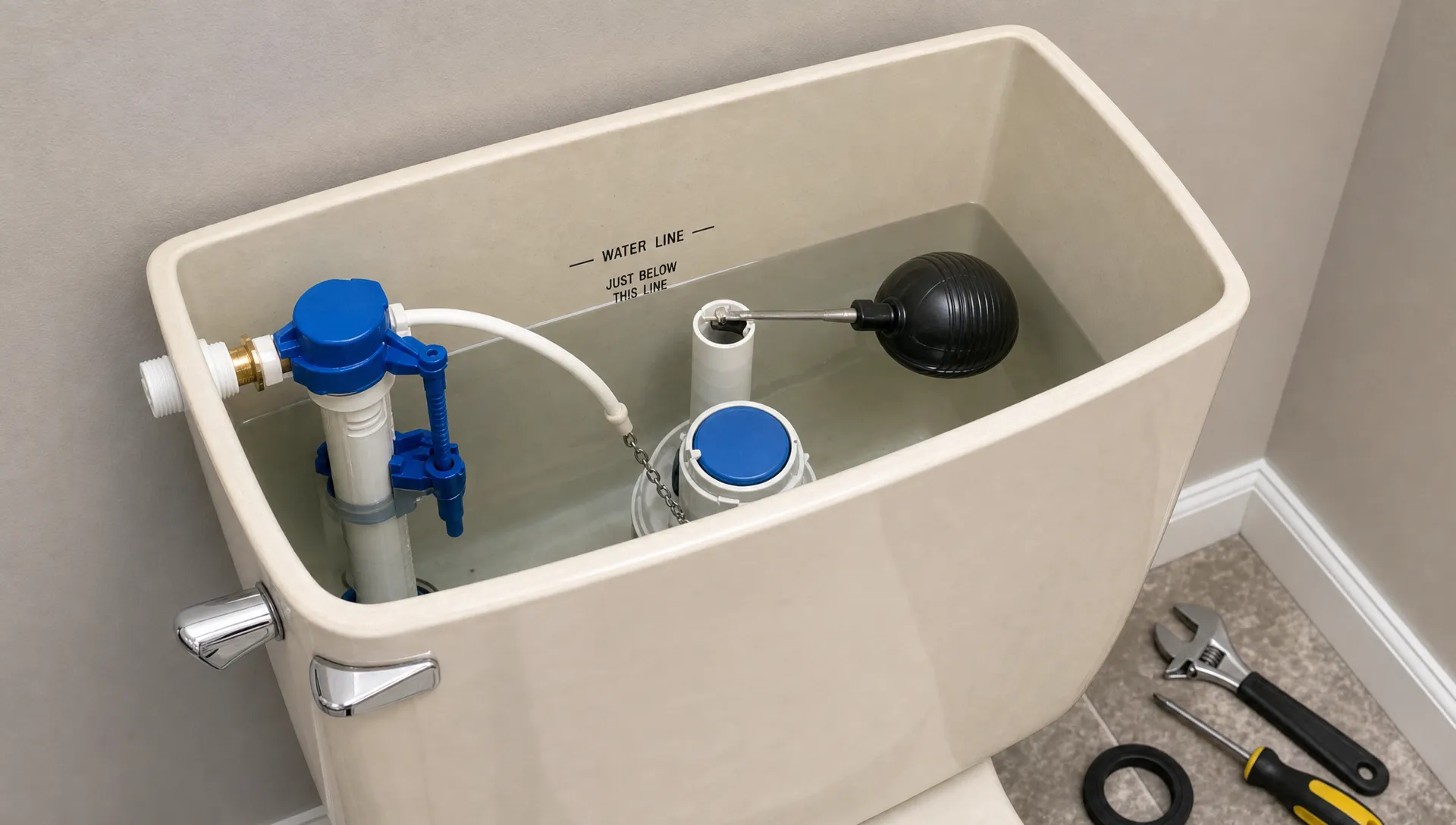
The fill valve then opens and refills the cistern from the mains supply. As the water rises, a float rises with it. When the water reaches the correct level, the float tells the fill valve to shut off. At that point, the cistern should be quiet and still.
A running toilet usually means one of those actions is not completing properly. Either water is still escaping into the pan, or the fill valve is still letting fresh water into the cistern.
In a healthy cistern, the water level normally sits just below the overflow line or marked waterline. If the level rises too high, water may continuously flow into the overflow. If the flush seal fails to close, water can trickle straight into the bowl even when the cistern level looks normal.
Quick diagnosis: what kind of running toilet do you have?
Start by listening and looking. Different symptoms point to different faults.
| Symptom | Likely cause | What to check first |
|---|---|---|
| Water trickles into the pan constantly | Worn flush valve seal or flapper | Look at the rubber seal at the bottom of the flush valve |
| Cistern keeps refilling every few minutes | Slow leak from flush valve | Check for ripples or trickling in the toilet bowl |
| Water level is too high in the cistern | Float set incorrectly or sticking | Adjust the float and confirm the fill valve shuts off |
| Water runs into the overflow | Fill valve not closing properly | Inspect the fill valve and float movement |
| Toilet runs after a button flush | Sticking button or misaligned flush valve | Check that the button returns fully after flushing |
| Running stops if you lift the float | Fill valve or float problem | Clean, adjust, or replace the fill valve |
A useful test is to add a few drops of food colouring to the cistern water, then wait 10 to 15 minutes without flushing. If coloured water appears in the toilet bowl, water is leaking from the cistern into the pan. This usually points to the flush valve seal, flapper, or siphon mechanism.
According to Waterwise guidance on leaky loos, a leaking toilet can waste hundreds of litres of water per day. That is why even a quiet trickle is worth fixing promptly.
The most common reasons your toilet keeps running
1. The flush valve seal or flapper is worn
This is one of the most common causes. The seal at the bottom of the flush valve is supposed to close firmly after each flush. Over time, rubber can harden, warp, split, or become coated with limescale. When that happens, water slips past the seal and runs into the pan.
In older toilets, you may have a flapper instead of a modern flush valve. The principle is the same. If the flapper does not sit flat, water leaks through.
Signs of this fault include a constant trickle into the bowl, the cistern refilling at intervals, or a toilet that sounds as though it is quietly flushing itself.
2. The float is set too high
The float controls the fill valve. If it is set too high, the cistern fills above the safe water level and drains into the overflow. This can make the toilet run continuously even though the flush mechanism itself is working.
Some floats are adjusted with a screw. Others slide up and down on a vertical rail. Lowering the float slightly is often enough to stop the problem.
3. The fill valve is not shutting off
If the fill valve fails, water continues entering the cistern after it should have stopped. This can happen because of worn internal parts, grit in the valve, limescale build-up, or a float that is catching on the cistern wall.
A clue is that the running stops when you gently lift the float by hand. If lifting the float stops the water, the issue is probably linked to the float height or fill valve. If lifting the float does not stop the water, the fill valve may need replacing.
4. The flush button, handle, or chain is sticking
Sometimes the problem is mechanical rather than a failed valve. A push button may stick down slightly, or a handle chain may be too tight. This prevents the flush valve or flapper from closing fully.
Check whether the button springs back after a flush. If you have a handle toilet, check that the handle returns to its resting position and that the chain has a small amount of slack.
5. Limescale or debris is stopping parts from sealing
Hard water areas across the UK can see limescale build-up inside toilet cisterns. Even a small deposit on a rubber washer or valve seat can stop the seal from closing properly.
Bits of grit from pipework can also lodge inside a fill valve, particularly after plumbing work or local mains repairs. Cleaning the affected part may solve the issue without replacing anything.
Before you start: tools and safety checks
Most running toilet fixes are low-risk, but you are still working with water, plastic fittings, and sometimes older pipework. Take a few minutes to prepare.
You may need:
- A flat-head screwdriver for the isolation valve or float adjustment
- An adjustable spanner if a valve needs replacing
- Rubber gloves and an old towel
- A sponge or small container to remove leftover cistern water
- A replacement flush valve seal, flapper, or fill valve if the existing part is worn
- A phone camera to photograph the mechanism before taking anything apart
Find the toilet isolation valve before you begin. It is usually on the small pipe feeding the cistern. Turn the screw slot a quarter turn so it sits across the pipe, then flush the toilet to empty most of the cistern. If there is no working isolation valve, or if pipework looks corroded, do not force it.
Be careful with ceramic cistern lids. On many dual-flush toilets, the lid is held by the push button. You may need to unscrew the button surround before lifting the lid. Place the lid somewhere safe and flat.
How to fix a running toilet
Check whether water is leaking into the pan
Remove the cistern lid and wait until the toilet is not being used. Look inside the pan. If you can see rippling, trickling, or a faint stream at the back of the bowl, the cistern is probably leaking through the flush valve.
The food colouring test can confirm this. Add colouring to the cistern, do not flush, then check whether colour appears in the bowl. If it does, focus on the flush seal or flapper.
Lower the float if the cistern is overfilling
If the water level is above the marked line or close to the top of the overflow, adjust the float down.
On many modern fill valves, there is a small adjustment screw or clip. Turn the screw gradually or move the float down a little, then flush and let the cistern refill. The target is a water level below the overflow and close to the manufacturer’s marked level if visible.
Do not set the water too low, as the flush may become weak. Make small adjustments and test each time.
Clean the flush valve seal
If water is leaking into the pan, isolate the water supply and flush to empty the cistern. Depending on the design, the flush valve may twist and lift out, or it may be fixed differently. Do not force it if it will not move easily.
Once you can access the rubber seal, inspect it for limescale, grit, cracks, swelling, or distortion. Wipe the seal and the surface it sits against with a clean cloth. If there is limescale, clean it gently using a suitable descaler, then rinse thoroughly before reassembling.
Turn the water back on and test again. If the trickle stops, the seal was likely dirty rather than damaged.
Replace a damaged seal or flapper
If the rubber seal is split, warped, hardened, or no longer sits flat, cleaning will not be enough. Replacement seals are usually inexpensive, but you need the correct size and type for your flush valve.
Take the old seal with you when buying a replacement, or note the make and model of the flush valve if visible. For an older flapper toilet, replace the flapper and make sure it sits neatly over the outlet.
After fitting the new part, refill the cistern and test the toilet several times. Check both the water level and the bowl for any continued trickle.
Adjust a handle chain or sticking button
For handle toilets, the chain should not be pulled tight when the toilet is at rest. If it is too tight, the flapper may be held slightly open. Adjust the chain so there is a little slack, but not so much that the flush becomes unreliable.
For push-button toilets, check that the button assembly is correctly seated in the cistern lid. A misaligned button can keep pressure on the flush mechanism. If the toilet only runs when the lid is in place, the button rods or mechanism may need adjusting.
Check whether the fill valve needs replacing
If the cistern continues filling even when the float reaches its shut-off position, the fill valve may be faulty. You may hear a constant hiss or see water entering the overflow.
Sometimes cleaning the valve inlet helps, but many faulty fill valves are simply replaced. If you are confident with basic plumbing, isolate the water, drain the cistern, disconnect the supply connection, remove the old valve, and fit a compatible replacement. Make sure washers are seated correctly and do not overtighten plastic fittings.
If you are unsure, or if the connection is stiff, leaking, or difficult to access, it is better to book professional help. TradesLocal can arrange tap, sink and toilet repairs when a cistern repair needs a qualified plumber rather than a DIY attempt.
What if the toilet still keeps running?
If you have adjusted the float, cleaned or replaced the seal, and checked the button or handle, but the toilet still runs, there may be a less obvious fault. The flush valve body may not be sealing against the cistern, the fill valve may be incompatible with the cistern, or internal parts may be worn beyond a simple washer replacement.
Concealed cisterns can be trickier. Access may be through a flush plate, vanity unit, tiled boxing, or service panel. If you cannot access the components without damaging the surrounding finish, stop and call a plumber.
You should also get help if you notice water outside the toilet, damp flooring, staining under the cistern, or a musty smell. Those signs may point to a leak rather than a simple running cistern. If you are not sure where water is coming from, this guide to signs of a hidden water leak at home explains what else to look for.
When to call a plumber
A running toilet is often fixable, but there are times when calling a plumber is the safer and faster option.
Call a professional if the isolation valve does not work, the cistern is concealed, the pipework is corroded, the toilet is leaking onto the floor, the cistern or pan is cracked, replacement parts do not fit, or the toilet keeps running after basic adjustments.
You should also avoid dismantling fittings if the toilet is your only working WC and you are not confident you can reassemble it the same day. A small fault can become much more disruptive if the cistern cannot be refilled or flushed afterwards.
How to stop a running toilet temporarily
If you need a short-term fix while waiting for parts or a plumber, turn off the toilet isolation valve and flush once to empty the cistern. This should stop fresh water entering the cistern and prevent ongoing waste.
Only do this if the toilet is not needed immediately, as it will not refill until the isolation valve is turned back on. If the isolation valve is stiff or dripping, leave it alone and use the main stopcock only if necessary.
For a toilet that runs because of a sticking handle or button, gently lifting the handle back to rest or releasing the button may stop the flow temporarily. Do not wedge internal parts into position, as this can damage the mechanism or cause an unreliable flush.
Preventing the problem from coming back
Once the toilet is working again, a few simple habits can reduce the chance of another running cistern.
Avoid dropping harsh cleaning blocks directly into the cistern unless they are specifically designed for your toilet mechanism. Some products can degrade rubber seals over time. In hard water areas, check the cistern periodically for limescale around moving parts. If the flush starts to feel weak, noisy, or slow to refill, investigate early rather than waiting for a constant run.
It is also worth knowing where your toilet isolation valve and main stopcock are. In any plumbing fault, being able to stop the water quickly can prevent damage and give you more time to arrange a proper repair.
Frequently asked questions
Why is my toilet running after I flush? The most likely causes are a flush valve seal that is not closing, a flapper that is not sitting flat, a sticking button or handle, or a fill valve that is allowing the cistern to overfill.
Can I fix a running toilet myself? Yes, many running toilet problems can be fixed by adjusting the float, cleaning the flush seal, or replacing a worn washer or flapper. If the cistern is concealed, leaking externally, or difficult to isolate, call a plumber.
Will a running toilet increase my water bill? If you have a water meter, yes. Even a quiet trickle can waste a lot of water over time, so it is worth repairing promptly.
How do I know if the fill valve is faulty? If the cistern keeps filling after the float has risen, or if lifting the float by hand stops the running water, the fill valve or float setting is likely to be the issue.
Why does my dual-flush toilet keep running? Dual-flush toilets often run because the flush valve seal is worn, the button is sticking, the button rods are misaligned, or limescale is stopping the valve from closing cleanly.
Should I turn off the water to a running toilet? If the toilet is wasting water and you cannot fix it immediately, turning off the isolation valve is a sensible temporary measure. Do not force a stiff valve, as old fittings can leak or break.
A running toilet can look minor, but it is usually a sign that something inside the cistern needs adjustment, cleaning, or replacement. If the simple checks above do not solve it, or you would rather avoid the risk of leaks and damaged fittings, request help from TradesLocal for fast plumbing support across the UK.