A burst pipe at home is one of those problems where speed matters, but calm matters more. In the first ten minutes, your job is not to repair the pipe perfectly. It is to make the area safe, stop or reduce the water flow, protect electrics and get professional help on the way.
Use this as an emergency checklist. If there is any risk to life, fire, structural collapse or electric shock, leave the area and call the emergency services before touching anything.
The first ten minutes: a simple action plan
| Time | What to do | Why it matters |
|---|---|---|
| First 60 seconds | Keep people and pets away, especially from wet electrics. | Reduces the risk of injury before you act. |
| Minutes 1 to 3 | Turn off the water at the stopcock or a local isolation valve. | Stops the flow at source or slows it down. |
| Minutes 3 to 5 | Open taps and turn off heating or hot water controls if safe. | Releases pressure and protects the system. |
| Minutes 5 to 7 | Use buckets, towels and bowls to contain water. | Limits spread into floors, ceilings and walls. |
| Minutes 7 to 10 | Call an emergency plumber, then photograph the damage. | Gets the repair moving and preserves insurance evidence. |
The order is important. Water damage can spread quickly through floorboards, ceiling voids and plasterboard, but touching switches or wading through water near electrics can be dangerous. Safety comes first, then isolation, then damage control.
Minute 0 to 2: make the area safe
If water is close to sockets, light fittings, appliances or the consumer unit, treat the situation as unsafe. Do not touch wet switches, plugs or appliances. If you can reach the main switch at the consumer unit while standing on a dry surface and using dry hands, turn the power off. If you cannot do that safely, keep clear and wait for a qualified professional.
Keep children and pets out of the room. If the burst pipe is upstairs and water is coming through a ceiling below, do not stand directly underneath it. A soaked ceiling can sag, crack or collapse without much warning.
If the leak is near your boiler, hot water cylinder or immersion heater, switch the heating and hot water controls off if it is safe. Do not remove boiler covers or attempt to work inside sealed heating appliances. Your immediate priority is to stop the water and prevent electrical contact.
Minute 1 to 3: shut off the water
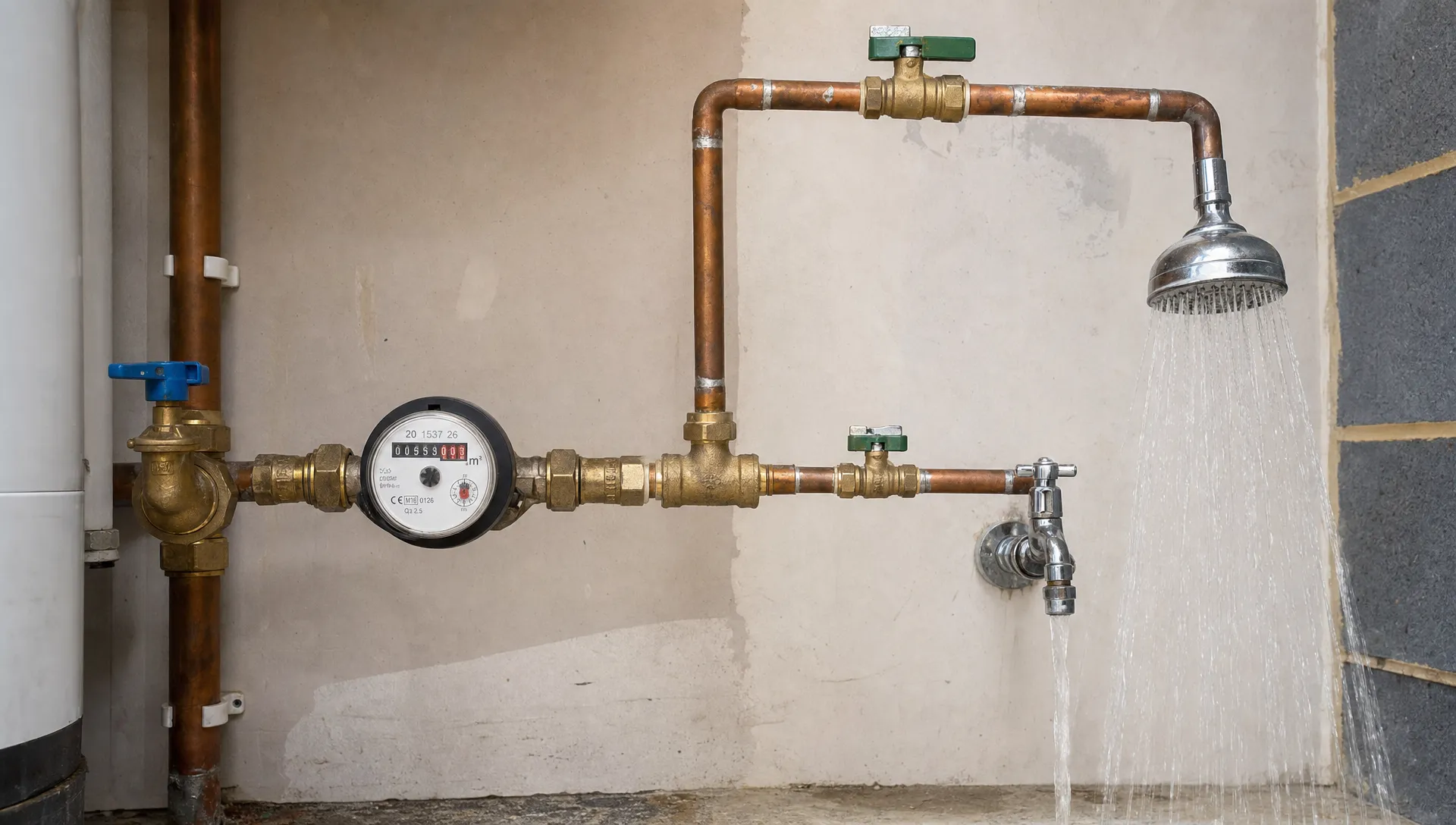
For most UK homes, the quickest way to stop a burst pipe is to turn off the internal stopcock. It is also called a stop tap or stop valve. Turn a traditional wheel or tap-style stopcock clockwise until it stops. If you have a lever valve, turn the lever a quarter turn so it sits across the pipe rather than in line with it.
Do not force a stiff old valve with excessive pressure. A seized stopcock can break, which may make the emergency worse. If it will not move, try a nearby isolation valve if you can see one, then call for help.
Where is my stopcock likely to be?
If you are asking, where is my stopcock, start with the places where the mains water pipe usually enters the property. In many homes, it is hidden in plain sight and may be partly covered by stored cleaning products or boxed-in pipework.
Common locations include:
- Under the kitchen sink, often at the back of the cupboard.
- In a utility room, downstairs toilet or hallway cupboard.
- Under the stairs or near the front door.
- In a cellar, basement or garage.
- Near the boiler or hot water cylinder in some older layouts.
- Outside in a meter box, pavement chamber or boundary stop tap.
If you live in a flat, the stopcock may be inside your flat, in a communal riser cupboard, near the front door or in a service cupboard shared with other flats. If you cannot access the communal valve, contact your building manager, landlord or managing agent immediately.
Some fixtures have their own local isolation valves. You may see a small slotted screw on a short valve under a sink, behind a toilet or near an appliance. Turning the slot so it sits across the pipe can isolate that fixture. This will not help if the burst is on the incoming main before the valve, but it can stop water from a failed tap connector, toilet feed or appliance hose.
If water is still escaping after you have tried to isolate it, or you cannot find the stopcock quickly, arrange a 24/7 emergency plumbing callout while you continue safe damage control.
Minute 3 to 5: drain the pipework and protect the heating system
Once the mains water is off, open the cold taps to drain water left in the pipework. Start with the lowest tap in the house if you can, then open other cold taps. This helps release pressure and reduces the amount of water that can continue leaking from the burst section.
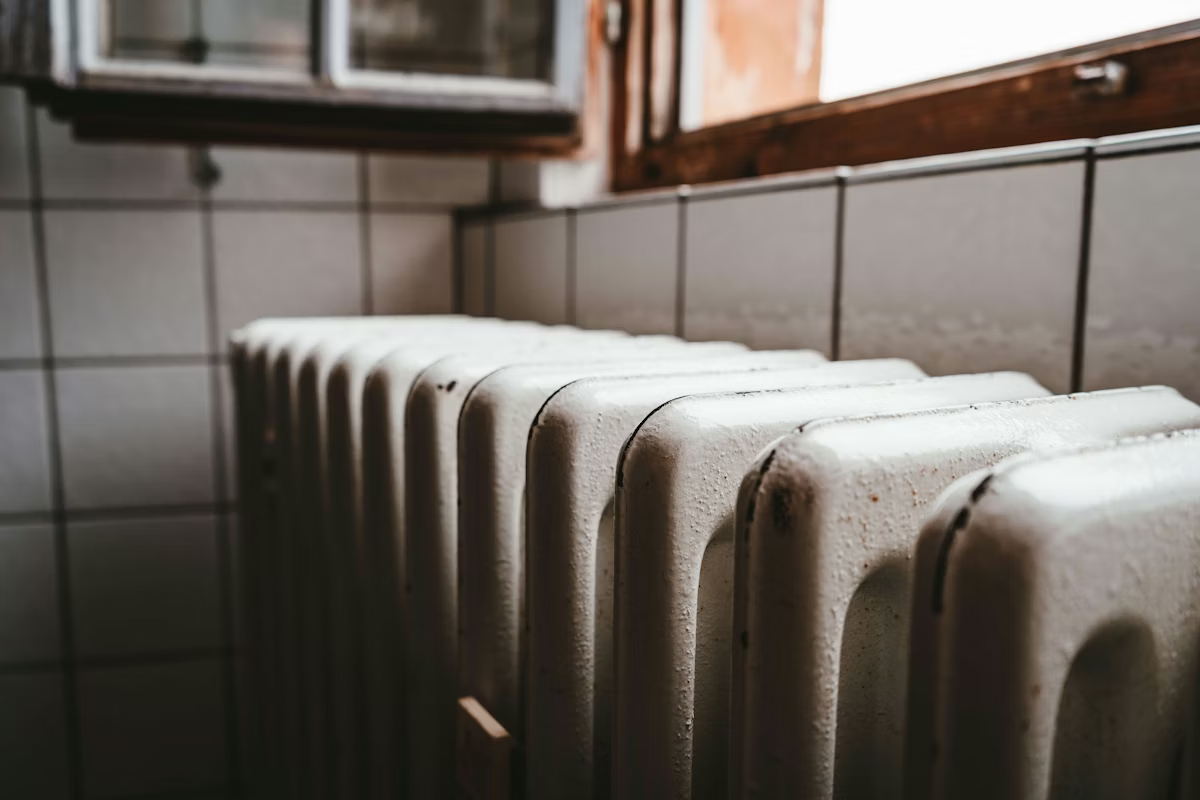
Open hot taps too, but only after switching off your boiler, immersion heater or hot water controls if safe. This matters because heating appliances should not be left trying to heat an empty or partially drained system.
Flush toilets once to empty the cisterns. Do not keep flushing repeatedly. If a sink, bath or shower tray is draining slowly, avoid sending more water into it because you could create a second problem.
For a small, visible leak from a pipe joint, wrapping a towel around the pipe can direct water into a bucket and reduce spray. Emergency pipe repair tape or a clamp may help temporarily if you already have one and can use it safely, but it should not be treated as a permanent fix.
Minute 5 to 10: contain the water and call the right help
After the water is isolated, focus on limiting spread. Move rugs, small furniture, electronics, documents and valuables away from the wet area. Put buckets, bowls or trays under drips. Use towels to form a barrier at doorways or around skirting boards.
If water is coming through a ceiling, place a bucket underneath from a safe distance and keep people out of the room. Do not poke a bulging ceiling unless a professional has told you to do so and you are certain there are no electrics nearby. The water may be travelling along joists or cables from a different part of the house, so the visible drip is not always directly below the burst pipe.
When you call a plumber, clear information helps them prioritise the job and bring the right materials. Be ready to explain:
- Your postcode and property type.
- Whether the mains water is off.
- Where the leak appears to be, such as under a sink, in the loft or below floorboards.
- Whether water is near electrics, ceilings or the boiler.
- Whether you are a homeowner, tenant, landlord or leaseholder.
- Any access issues, parking restrictions or shared building arrangements.
Take photos and short videos after you have made the area safe. Capture the leak source, wet flooring, damaged ceilings, affected furniture and the stopcock position if relevant. This can help your insurer and the plumber understand what happened.
What not to do in the rush
A burst pipe creates pressure to act quickly, but a few common mistakes can make the damage worse or create a safety risk.
Avoid these in the first ten minutes:
- Do not touch sockets, switches or appliances if there is water nearby.
- Do not use a normal vacuum cleaner to remove water.
- Do not rely on tape, sealant or towels as a proper repair.
- Do not turn the water back on to test the leak before a plumber checks it.
- Do not ignore water marks in the room below, even if the main leak seems contained.
If the water has affected electrics, get them checked before switching circuits back on. A room can look dry at surface level while moisture remains behind sockets, under flooring or inside ceiling voids.
After the first ten minutes: reduce damage without making it worse
Once the plumber is on the way and the water flow has stopped, you can start careful clean-up. Mop standing water from hard floors if the area is safe. Lift loose rugs and mats. Open windows for ventilation if weather and security allow.
Avoid using electrical heaters, fans or dehumidifiers in wet rooms until you are confident the sockets and circuits are safe. If water has soaked through ceilings, walls or flooring, drying can take much longer than it appears. Plasterboard, timber and insulation can hold moisture, which may lead to staining, swelling or mould if rushed.
Contact your home insurer as soon as practical. Many policies include cover for sudden escape of water, but terms vary, so follow your insurer's reporting process. Keep receipts for emergency callouts, drying equipment and temporary repairs. Do not throw away damaged items until your insurer has told you what evidence they need.
Only redecorate when the structure is properly dry. If staining has spread across a ceiling or wall, look for decorators who explain preparation, stain blocking and finish guarantees clearly. For example, this North Zealand and Copenhagen provider presents professional painting and decorating services with customer reviews and guarantee information, the sort of signals worth checking before hiring someone for post-leak repair work.
If you are a tenant, leaseholder or flat owner
Tenants should still act to prevent damage if it is safe. Turn off the stopcock, move possessions and report the emergency to the landlord or letting agent straight away. Keep a written record of the time you reported it and any action taken.
If you own or rent a flat, tell neighbours below you if water may have travelled through the floor. In apartment blocks, a leak can affect multiple properties before anyone sees visible damage. The building manager or freeholder may need to isolate a communal riser or arrange access to service cupboards.
Leaseholders should check whether the affected pipework is demised to the flat or part of the communal system. In the emergency moment, though, do not delay isolation while trying to interpret paperwork. Stop the water first, then sort responsibility once the situation is stable.
Why pipes burst and how to reduce the risk next time
Burst pipes are common during cold snaps, but freezing is not the only cause. Corrosion, old joints, accidental damage, excessive movement, high pressure and poor installation can all contribute. Flexible appliance hoses, toilet feeds and pipes hidden under floors can fail suddenly too.
Prevention is mostly about access, insulation and early attention to small warning signs. A homeowner who can find the stopcock quickly is already in a stronger position than someone searching every cupboard while water spreads.
Practical steps include:
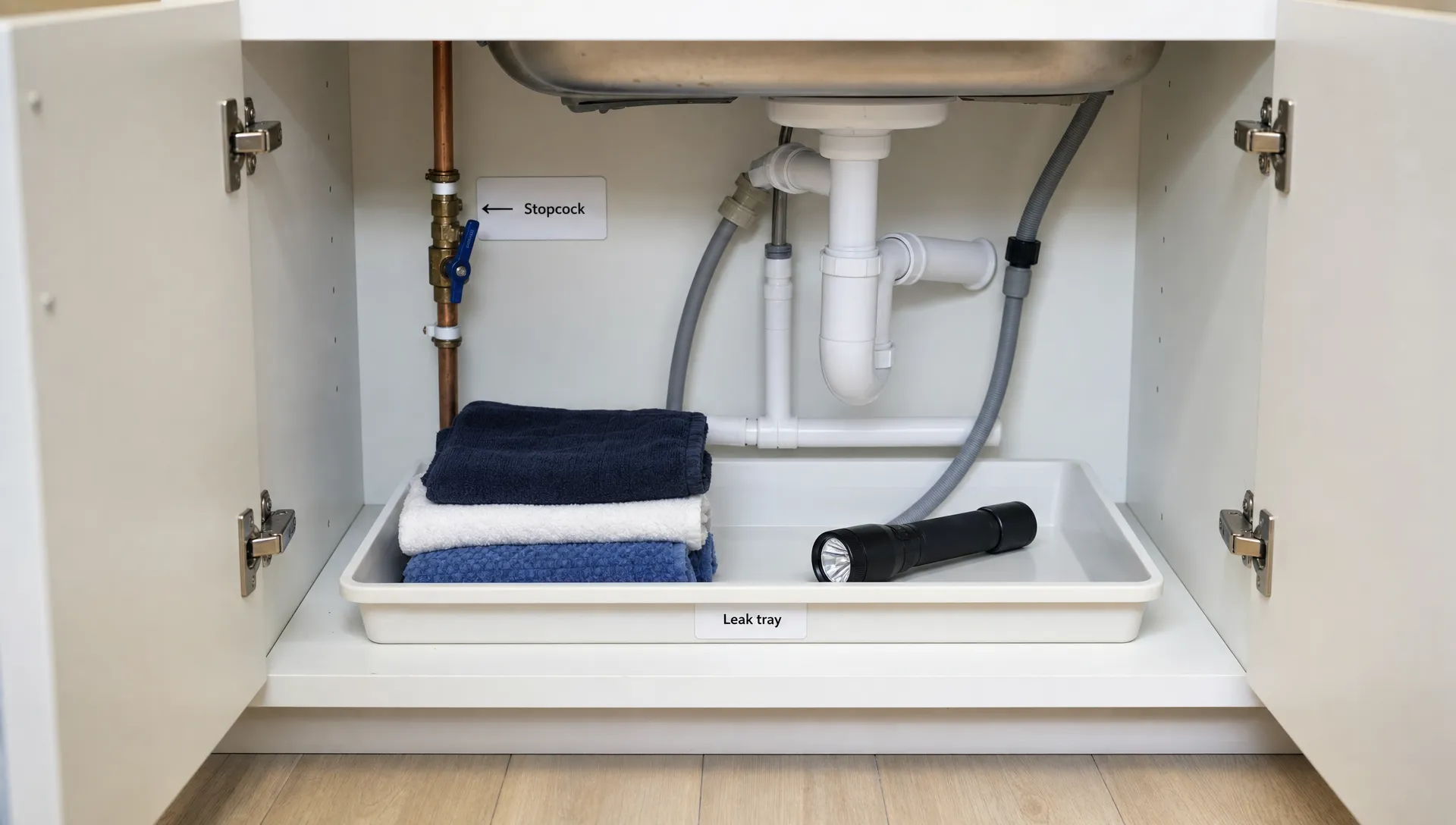
- Label your stopcock so every adult in the home can find it.
- Test the stopcock a couple of times a year so it does not seize.
- Lag exposed pipes in lofts, garages and cold cupboards.
- Keep low background heating on during freezing weather if the property is occupied.
- Repair small leaks, dripping valves and loose pipe clips before they worsen.
- Consider simple leak alarms near boilers, sinks, cylinders and appliances.
It also helps to keep a basic emergency kit in a known place. Towels, a torch, a bucket, rubber gloves and the phone number for your plumber can save several minutes when you are under pressure. For a wider household safety checklist, TradesLocal's guide to home emergency essentials every homeowner should know is a useful reference once the immediate leak is dealt with.
Frequently Asked Questions
Should I turn off the water or electricity first? If water is near electrics, keep away and isolate electricity only if you can reach the main switch safely from a dry position. Otherwise, shut off the water if the route is safe and call for professional help. Never touch wet switches, plugs or appliances.
Where is my stopcock in a UK house? It is commonly under the kitchen sink, in a utility room, hallway cupboard, under the stairs, in a garage or near the front door. Some homes also have an external stop tap in a meter box or pavement chamber near the boundary.
Can I fix a burst pipe myself with tape? Tape or a clamp can be a temporary measure for a small accessible leak, but it is not a proper repair for a burst pipe. The damaged section, joint or fitting should be inspected and repaired by a qualified plumber.
Will home insurance cover a burst pipe? Many policies cover sudden escape of water, but cover depends on your policy terms, maintenance history and the cause of the leak. Stop the water, document the damage, keep receipts and contact your insurer promptly.
How long does a water-damaged wall or ceiling take to dry? It depends on the amount of water, ventilation, materials and whether insulation or voids are affected. Surface dryness is not enough. Wait until the area is properly dry before plaster repairs or redecorating.
Need urgent help with a burst pipe?
If you have a burst pipe at home, do not wait for the damage to spread. TradesLocal provides fast-response home services across the UK, including emergency plumbing, drainage, heating and electrical support from qualified specialists.
Use the first ten minutes to make the property safe, find the stopcock and reduce the water flow. Then request help through TradesLocal so the repair can be assessed properly and your home can start getting back to normal.