Your roof is one of the most important parts of your home — it protects everything beneath it from the elements. Yet it’s also one of the most overlooked. Many UK homeowners only think about their roof when something goes visibly wrong, by which point the damage can be costly to repair. Knowing the early warning signs that your roof may need replacing can save you thousands of pounds and a great deal of stress. In this guide, we walk you through exactly what to look out for.
How Long Does a Roof Last?
Before diving into the warning signs, it helps to understand the typical lifespan of different roof types. A well-maintained pitched roof — the most common type in UK homes — can last anywhere between 40 and 60 years, depending on the materials used and the quality of the original installation. Slate roofs often sit at the upper end of that range, while concrete or clay tiles may need attention sooner.
Flat roofs, which are common on extensions and some modern properties, have a shorter lifespan of around 20 to 30 years. Felt flat roofs tend to deteriorate faster, while modern EPDM rubber or fibreglass (GRP) flat roofs can last considerably longer with proper maintenance.
If your roof is approaching or has exceeded these ages, it’s worth having it professionally inspected even if you haven’t noticed any obvious problems yet.
Missing or Cracked Tiles
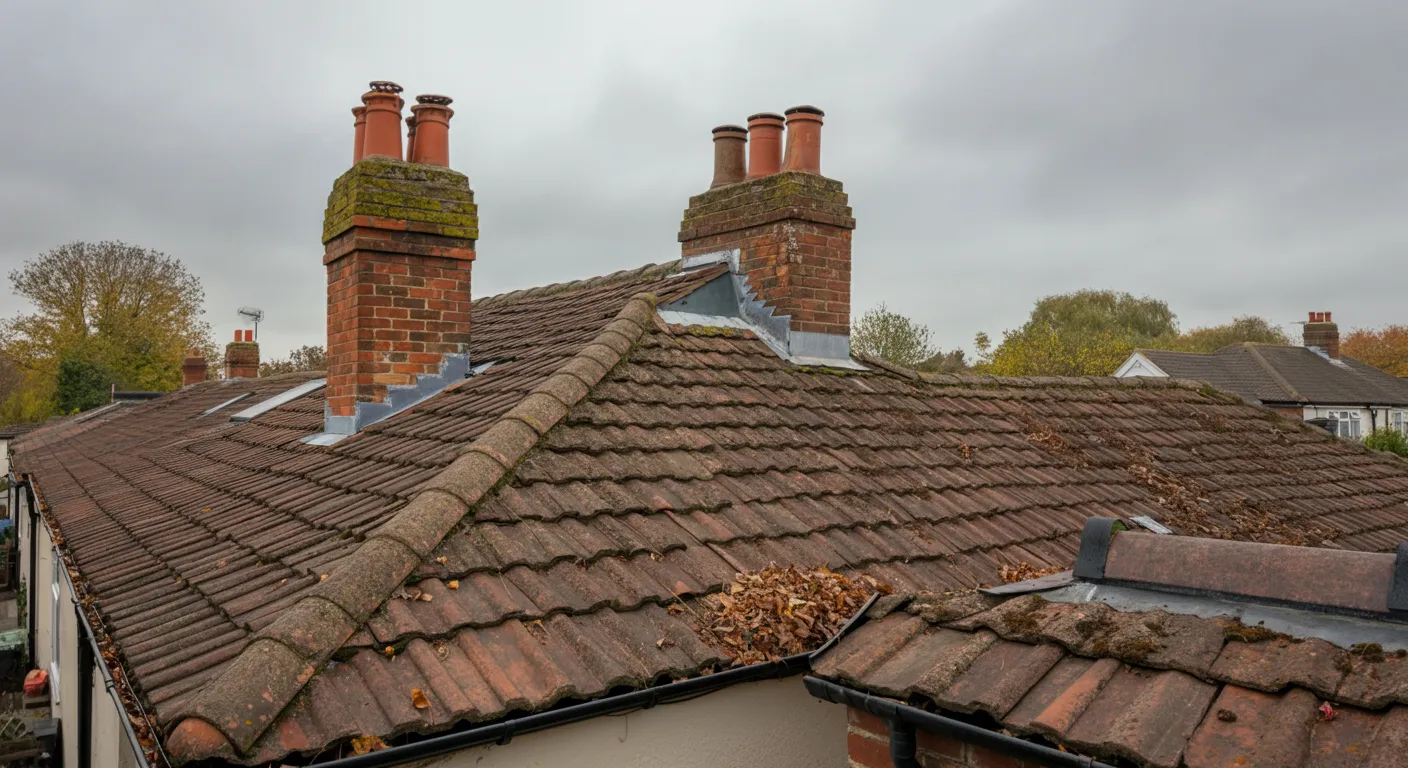
One of the most visible signs that your roof is in trouble is missing, cracked, or broken tiles. Tiles can become dislodged during storms or high winds, and over time the freeze-thaw cycle of UK winters causes them to crack and deteriorate. A few missing tiles don’t necessarily mean you need a full replacement — localised repairs may be sufficient — but widespread cracking or multiple missing tiles across the roof surface is a strong indicator that the roof is nearing the end of its life.
It’s worth checking your roof visually from the ground after any significant storm. If you notice tiles in your garden or guttering, or can see gaps in the roof covering from street level, call a roofer to carry out a closer inspection.
Sagging Roof
A sagging or dipping roofline is a serious warning sign that should never be ignored. It typically indicates structural problems — either with the roof decking (the boards beneath the tiles) or with the underlying timbers and rafters. Sagging can be caused by prolonged water ingress, rot, or simply the weight of the roof covering over many decades.
If you notice any visible dips, waves, or bowing in your roofline when viewed from the street, treat it as an urgent issue. In some cases, a sagging roof can pose a safety risk, and prompt action is essential. A qualified roofer or structural surveyor should assess it as soon as possible.
Daylight Through the Roof
If you have access to your loft space, it’s worth making a regular habit of checking it — particularly after heavy rain or strong winds. One of the clearest signs of roof failure is being able to see daylight coming through gaps in the roof structure. Even small pinpricks of light indicate that tiles, felt, or boarding have failed and that water can get in.
While you’re up there, also look for any signs of water staining on the rafters or insulation, damp patches on the loft floor, or areas where the felt appears to be sagging or torn. These are all signs that the roof covering is no longer doing its job effectively.
Damp Patches on Ceilings
Brown or yellowish staining on your ceilings, or patches of damp on upper-floor walls, are classic signs of a roof leak. Water can travel a surprising distance from the point of entry before it becomes visible inside the home, so the stain on your ceiling may not be directly below the source of the problem.
Damp patches can also be caused by condensation or plumbing issues, so it’s important to rule those out first. However, if the staining appears or worsens after rainfall, the roof is the most likely culprit. Left untreated, roof leaks can cause significant damage to ceilings, insulation, and even the structural timbers of your home, so early action is always worthwhile.
Moss and Algae Growth
A certain amount of moss on a UK roof is almost inevitable given our damp climate, but heavy or widespread moss and algae growth can be a sign of underlying problems. Moss retains moisture against the surface of tiles, accelerating their deterioration and potentially causing water to back up under the tile edges.
While moss can sometimes be treated and removed without replacing the roof, it’s worth having a roofer assess whether the tiles themselves have been damaged in the process. If the tiles are porous, crumbling, or have lost their surface coating, moss removal alone won’t be enough — the tiles will need replacing.
Damaged Flashing
Flashing is the metal (usually lead or aluminium) that seals the joints between your roof and vertical surfaces such as chimneys, skylights, and dormer walls. It’s one of the most common points of failure on an ageing roof. Over time, flashing can crack, lift, corrode, or pull away from the surface it’s sealing, allowing water to penetrate at these vulnerable junctions.
Signs of damaged flashing include water staining around chimneys or skylights on interior ceilings, visible gaps or rust around roof joints when viewed from outside, or flashing that appears to have lifted or buckled. Flashing repairs are often relatively straightforward and affordable, but if left unaddressed they can lead to significant water damage.
When to Call a Professional Roofer
If you’ve spotted one or more of the warning signs above, the most important thing you can do is get a professional opinion sooner rather than later. A qualified roofer will be able to carry out a thorough inspection — including areas that aren’t visible from the ground — and give you an honest assessment of whether you need a repair, a partial re-roof, or a full replacement.
Don’t be tempted to put it off. Small roofing problems have a habit of becoming large, expensive ones very quickly, especially during the wetter months. The good news is that catching issues early almost always means a less disruptive and more affordable fix. A reputable roofer will give you a clear, no-obligation quote and explain your options so you can make an informed decision with confidence.