When a toilet will not flush, the quickest fix usually comes from checking the symptoms in the right order. A loose button, empty cistern and blocked pan can all feel like the same problem when you are standing in front of a toilet that refuses to clear, but they need different fixes.
This guide is written for UK homes and covers the most common causes, starting with the checks that prevent overflow and ending with the faults that usually need a plumber or drainage specialist. If your toilet won't flush at all, or your toilet is not flushing properly and leaves paper behind, work through the steps below before dismantling anything.
Before you start: stop the problem getting worse
Do not keep flushing to see if it clears. If the pan is blocked, repeated flushing can push wastewater over the rim or into another fixture. One careful test is enough to tell you which direction to go.
If the water in the pan rises after you press the button or pull the handle, treat it as a blockage first. If the pan level stays normal but nothing much happens, the fault is more likely to be inside the cistern or flush mechanism.
Before removing the cistern lid or trying any DIY fix, take a few sensible precautions:
- Stop pressing the flush button if the bowl is filling or draining slowly.
- Turn off the small isolation valve on the pipe feeding the cistern if water is leaking or the cistern will not stop filling.
- Wear rubber gloves if you are plunging or clearing anything from the pan.
- Avoid chemical drain cleaners, especially if the toilet is already full, as they can splash and damage fittings.
- Call for help quickly if wastewater is coming up through the bath, shower, basin or outside drain.
If the toilet is your only one, if there is sewage involved or if the cistern is concealed behind tiles or boxing, a fast professional repair is often less disruptive than guessing.
Quick symptom guide
Use the symptom first, not the part you suspect. This helps you avoid replacing a flush valve when the real issue is a blockage further down the waste pipe.
| What you notice | Check first | Most likely issue |
|---|---|---|
| Water rises in the pan after flushing | Pan and waste outlet | Local blockage or downstream drain issue |
| Button presses but nothing happens | Button, cable or handle linkage | Disconnected or broken flush control |
| Handle moves but flush is very weak | Siphon, diaphragm or flush valve | Failed internal flush mechanism |
| Cistern is empty or filling very slowly | Isolation valve, float and fill valve | Water supply or inlet valve problem |
| Toilet flushes but leaves paper behind | Water level, rim holes and partial blockage | Weak flush or restricted flow |
| Gurgling from other fixtures | Drains and soil pipe | Deeper drainage or venting problem |
1. Check the pan for a blockage
A blocked pan is the first thing to rule out because it is the fault most likely to cause an overflow. The clue is simple: when you flush, water enters the pan but does not leave quickly enough. The level may rise close to the rim, then drain away slowly over several minutes.
Common causes include too much toilet paper, wet wipes, sanitary products, cotton pads, children’s toys and limescale narrowed pipework. Even products labelled flushable can contribute to blockages because they do not break down like toilet paper.
If the blockage appears local to the toilet, use a proper toilet plunger with a flange rather than a flat sink plunger. Create a seal over the outlet, then use steady push and pull pressure. Keep the first few movements gentle to avoid splashback, then increase the force if the water level is stable.
If the toilet clears, flush once with clean water and watch how quickly it drains. If it still drains slowly, the blockage may only be partly moved. Do not repeatedly flush a slow pan.
When other fixtures are affected, treat it as a drainage issue, not just a toilet issue. For example, if the bath gurgles when you flush or an outside gully is full, the problem may be beyond the toilet trap. TradesLocal’s guide to blocked drains, causes and when to call a drainage expert explains the warning signs that point to a wider blockage.
2. Check whether the cistern has enough water
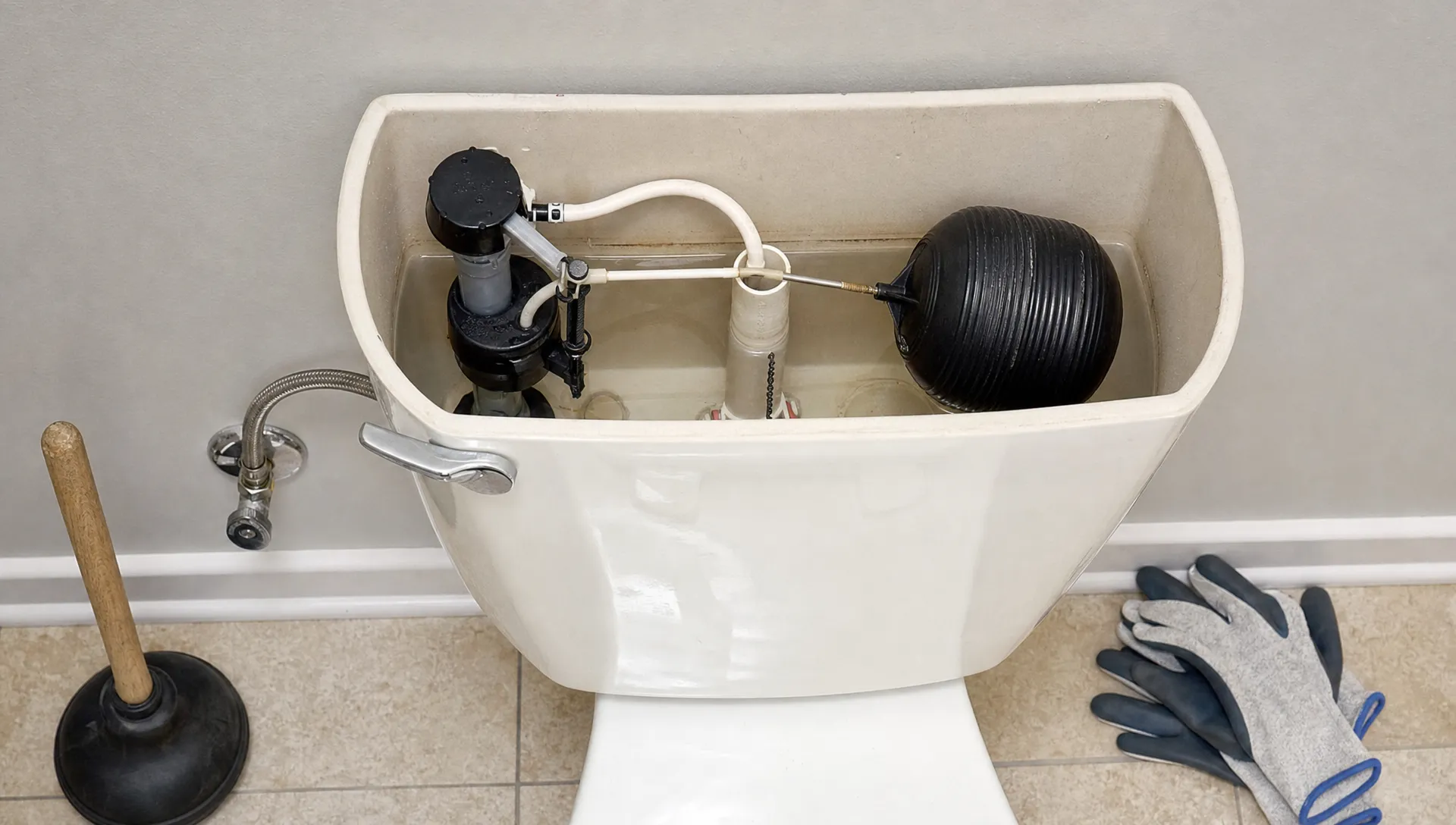
If the pan is not blocked, lift the cistern lid carefully and look inside. Most toilets need the cistern water level to sit close to the marked fill line, often around one to two centimetres below the overflow. If the water level is too low, the toilet may flush weakly or fail to flush at all.
An empty or low cistern usually means one of three things: the water supply is turned off, the fill valve is not letting water in or the float is stuck in the raised position. Start with the isolation valve on the small pipe feeding the cistern. The slot in the valve should usually run in line with the pipe when open. If it is turned across the pipe, it may be shut.
Next, gently move the float. If it is jammed against the side of the cistern, it may be telling the fill valve that the cistern is already full. Mineral build-up and old plastic parts can make this worse, especially in hard water areas.
If the cistern fills but only halfway, the float may be set too low or the fill valve may be faulty. Some modern valves allow adjustment, but do not force brittle parts. A cracked fill valve can leak into the cistern or onto the floor.
As a temporary measure, if the pan is definitely not blocked, you can flush by pouring a bucket of clean water into the toilet pan in one controlled pour. This does not fix the cause, but it can help until the cistern is repaired.
3. Check the flush button, handle or cable
If the cistern contains water but the toilet will not flush, check the part that starts the flush. On push button toilets, the button may feel loose, jammed or unusually easy to press. On handle toilets, the lever may move freely without resistance.
Many push button toilets use a small cable or rod that links the button to the flush valve. If the cistern lid has been lifted recently, the cable can detach. In some cases, reconnecting it is straightforward. In others, the button assembly is cracked or the cable has stretched, which means the flush mechanism is not being triggered fully.
For handle operated toilets, the handle arm inside the cistern may have slipped, snapped or disconnected from the siphon. If the handle moves but does not lift anything inside the cistern, the linkage is the likely fault.
Be careful with concealed cisterns. Access panels can be awkward, and pulling too hard on a button plate or flush pipe can create a leak behind a wall. If the cistern is boxed in, tiled over or part of a wall hung toilet, it is usually better to get a plumber involved before parts are damaged.
4. Check the siphon or flush valve
If the button or handle is moving correctly but the flush is weak or absent, the fault may be the siphon or flush valve. These are the parts inside the cistern that release stored water into the pan.
Older UK toilets often use a siphon. Inside many siphons is a thin plastic diaphragm that helps start the flush. When that diaphragm splits, the handle may still move, but the toilet will not flush with any force. Sometimes you get a tiny trickle instead of the normal surge of water.
Modern dual flush toilets often use a drop valve or flush valve. If the valve sticks, does not lift properly or is affected by limescale, the toilet may fail to release enough water. A damaged seal can also let water leak from the cistern into the pan between flushes.
A flush valve or siphon replacement is common plumbing work, but the right part depends on the toilet model, cistern size and flush type. Some close coupled toilets need the cistern removed from the pan to replace the full assembly, which means disturbing bolts and seals that may already be worn.
If your main symptom is that water constantly trickles into the bowl rather than refusing to flush, the fault overlaps with a different diagnosis. TradesLocal has a separate guide on why your toilet keeps running and how to fix it that focuses on seals, floats and overflow problems.
5. Check the fill valve, float and inlet filter
A toilet that flushes once but will not flush again for a long time often has a fill problem. After the first flush, the cistern should refill within a reasonable time. If it takes ages, makes a strained noise or only dribbles in, the fill valve may be restricted.
In hard water areas, limescale can affect the moving parts of the fill valve. Debris can also enter the inlet after mains work or if old pipework has been disturbed. Some fill valves have a small inlet filter, but cleaning it safely means isolating the water and understanding how the valve comes apart.
A float that sits too low will shut the water off before the cistern has enough volume for a strong flush. A float that sticks high can prevent filling altogether. Gently moving the float may show whether it is catching, but avoid bending plastic arms or forcing adjustment screws.
If the cistern is not filling and other cold taps in the home are also weak, the issue may be broader than the toilet. Check whether neighbours are affected, whether your stopcock is fully open and whether any recent plumbing work has changed the supply.
6. Check why the toilet is not flushing properly
Sometimes the toilet flushes, but not well. It may leave paper behind, need two flushes or swirl without clearing the pan. This is often described as a toilet not flushing properly rather than a toilet that will not flush at all.
The first thing to check is still the cistern water level. A low water level means less force. If the cistern looks correctly filled, the next suspects are a partial blockage, limescale under the rim or a flush valve that is not opening fully.
Look under the toilet rim if it is safe and clean enough to do so. Rim holes can become restricted with scale and debris, especially in older pans. When water cannot enter evenly around the bowl, the flush loses its shape and force. A toilet-safe descaler may help, but avoid mixing cleaning products and follow the manufacturer’s instructions.
A weak flush can also be caused by a partial blockage in the toilet trap. The pan may clear eventually, but the flush feels sluggish. If plunging improves it briefly and the problem returns, there may be something lodged in the bend or further along the branch pipe.
Do not ignore a weak flush that is getting worse week by week. It is easier to clear a developing restriction than to deal with a full blockage, overflow or leak.
7. Check for a deeper drain, soil pipe or venting problem
If the toilet mechanism works and the pan still drains badly, the issue may be beyond the toilet. A restriction in the branch waste pipe, soil stack or external drain can make a good flush look weak because the water has nowhere to go.
The strongest clues are gurgling, bad smells, slow drainage in more than one fixture or wastewater appearing outside. In flats and terraced homes, shared drainage can complicate the diagnosis, so it is worth acting early rather than waiting for a complete backup.
Venting problems can also affect toilet performance. A soil vent pipe allows air into the drainage system so wastewater can move properly. If the vent is blocked, damaged or poorly installed, you may hear gurgling or notice traps being pulled low.
Toilet faults sometimes reveal adjacent building issues too. A soil vent pipe often passes through the roof, and damp around that penetration is a roofing waterproofing problem rather than a cistern repair. For roof related work, the principle is to choose a trade specific firm with clear credentials, as specialist waterproofing and roofing companies such as YG Étanchéité, toiture, couverture et bardage à La Réunion show through their service scope and assurance details.
What you can usually fix yourself and what needs a plumber
Some toilet flush problems are safe to investigate at home. Others are best left alone because the risk of overflow, hidden leaks or broken fittings is high.
| Situation | Reasonable DIY check | When to call a professional |
|---|---|---|
| Water rises in the pan | Stop flushing and try a toilet plunger | If water backs up elsewhere or the blockage returns |
| Cistern is empty | Check the isolation valve and float movement | If the fill valve needs stripping or replacement |
| Button is loose | Check whether the cable has detached | If the button plate or concealed cistern is awkward to access |
| Weak flush | Check water level and visible limescale | If the siphon, flush valve or seals need replacing |
| Toilet leaks after inspection | Turn off the water supply | If water appears around the cistern, pan connector or floor |
| Multiple fixtures gurgle | Stop using affected drains | If you suspect a soil pipe or external drain blockage |
If you have ruled out simple checks or you need the toilet working again quickly, TradesLocal can help with tap, sink and toilet repairs across the UK. This is especially useful when the problem involves a concealed cistern, failed siphon, leaking seal or recurring blockage.
How to reduce the chance of it happening again
Most toilet flush problems are preventable with a few habits. Only flush toilet paper and human waste. Wipes, cotton buds, dental floss, nappies, sanitary products and kitchen roll should go in the bin, even if the packaging suggests they can be flushed.
If you live in a hard water area, deal with limescale before it restricts rim holes or stiffens cistern components. Regular cleaning under the rim and occasional inspection inside the cistern can catch problems before the toilet stops flushing altogether.
Listen for changes too. A slow refill, a new trickle into the bowl or a button that needs extra pressure are early warnings. The sooner you deal with them, the less likely you are to end up with an emergency blockage or a toilet out of use.
For older toilets, replacement parts can become harder to match. If several components are worn, a plumber may recommend replacing the full flush mechanism rather than one small part. That can be more reliable than repeatedly patching brittle plastic fittings.
Frequently Asked Questions
Why will my toilet not flush even though the cistern is full? The most likely causes are a disconnected button or handle, a failed siphon diaphragm or a flush valve that is not lifting properly. If the cistern is full and the control feels loose, start with the linkage. If the linkage works but the flush is weak, the internal flush mechanism may need repair or replacement.
Can I flush a toilet with a bucket of water? Yes, but only if the pan is not blocked. Pour a bucket of clean water into the pan in one controlled movement to create a manual flush. Do not do this if the water level is high, slow to drain or rising, as it could cause an overflow.
Why does the toilet water rise when I flush? Rising water usually means the pan, toilet trap or downstream drain is restricted. Stop flushing and try a toilet plunger if the blockage appears local. If other fixtures gurgle or back up, call a drainage specialist.
Why is my dual flush button not working? The button may be jammed, the cable may have detached or the flush valve may be stuck. With some toilets, the cistern lid must be refitted in exactly the right position for the button rods or cable to operate properly.
Is a weak flush always caused by a blockage? No. A weak flush can come from a low cistern water level, limescale under the rim, a faulty siphon, a sticking flush valve or a partial blockage. Check the cistern first if the pan water does not rise.
When should I call a plumber for a toilet that will not flush? Call a plumber if the cistern is concealed, parts are cracked, water is leaking, the toilet is your only one or the problem returns after basic checks. If wastewater is backing up through other fixtures, you may need drainage help as well.
Need help with a toilet that will not flush?
A toilet that will not flush can be a minor cistern fault, but it can also be the first sign of a blockage or failing component. If you are unsure, stop using the toilet until the cause is clear.
TradesLocal provides nationwide UK support for plumbing and drainage issues, including 24/7 emergency callouts, qualified specialists, transparent pricing and a fast callback request form. If your toilet is not flushing properly or has stopped flushing altogether, getting the right trade involved early can prevent water damage, wastewater overflow and repeat callouts.