What Temperature Should You Set Your Thermostat?
For most UK homes, the ideal thermostat setting is somewhere between 18°C and 21°C. The World Health Organisation recommends a minimum of 18°C for healthy adults, while 21°C is generally considered comfortable for living areas during the day.
Setting your thermostat within this range strikes the right balance between comfort and cost. Going higher than 21°C is rarely necessary and can add significantly to your energy bills — every degree counts.
- 18°C — Minimum comfortable temperature for healthy adults; ideal for bedrooms at night
- 19–20°C — A good all-round daytime temperature for living areas
- 21°C — Suitable for households with young children, elderly residents, or those with health conditions
If you find yourself regularly pushing the thermostat above 21°C, it may be worth investigating whether your home has adequate insulation or whether your boiler is working efficiently.
Turning the Thermostat Up Higher Won’t Heat Your Home Faster
This is one of the most common — and costly — misconceptions about central heating. Setting your thermostat to 28°C when you want the room to reach 20°C does not speed up the process.
Your boiler works at the same rate regardless of how high you set the target temperature. All cranking it up does is cause the system to overshoot your desired temperature, leaving you uncomfortably warm and wasting energy in the process.
The fix is simple: set your thermostat to the temperature you actually want, and let the system do its job. If your home takes too long to warm up, the answer is better scheduling — not a higher dial setting.
Programmer vs Smart Thermostat: Which Is Right for You?
Most UK homes have either a basic programmer (a timer that switches heating on and off at set times) or a room thermostat that controls temperature. Many have both. Smart thermostats take this a step further.
Basic Programmers
A standard programmer lets you set heating schedules — for example, on from 6:30am to 8:30am and again from 5pm to 10pm. They’re reliable and straightforward, but offer limited flexibility.
Pros: Simple to use, no Wi-Fi required, low cost
Cons: Can’t adapt to your changing routine, no remote control
Smart Thermostats
Smart thermostats (such as Nest, Hive, or Tado) connect to your home Wi-Fi and can be controlled via a smartphone app. Many learn your routine over time and adjust automatically.
Pros: Remote control, learning capabilities, detailed energy reports, geofencing (heating activates when you’re on your way home)
Cons: Higher upfront cost (typically £100–£250 installed), requires Wi-Fi
When Should You Upgrade?
If you have an irregular schedule, frequently forget to turn the heating off when you leave, or want greater visibility over your energy use, a smart thermostat can pay for itself within a couple of years through energy savings.
Zone Heating: Only Heat the Rooms You Use
Heating your entire home to the same temperature at all times is one of the biggest sources of wasted energy. Zone heating means dividing your home into areas and only heating the spaces you’re actually using.
For example:
- Keep living areas at 20°C during the evening
- Set bedrooms to 16–18°C (cooler temperatures actually promote better sleep)
- Turn off or turn down radiators in unused rooms such as spare bedrooms or storage rooms
Zone heating is most effective when combined with Thermostatic Radiator Valves (TRVs) — more on those below.
The 1°C Rule: Small Changes, Big Savings
One of the simplest and most effective tips for reducing heating bills is the 1°C rule: lowering your thermostat by just 1°C can reduce your heating bill by approximately 10%.
For the average UK household spending around £900 a year on heating, that’s a saving of roughly £90 — just from turning the dial down one notch.
If you currently heat your home to 22°C, try dropping to 21°C for a week. In most cases, you’ll barely notice the difference in comfort, but you will notice it on your energy bill.
Setting Schedules Around Your Daily Routine
A well-programmed heating schedule is one of the most effective ways to stay warm without wasting money. Here’s a practical framework for a typical working household:
Suggested Weekday Schedule
- 6:00am – 8:00am — Morning warm-up: heat living areas and bathrooms before the household wakes
- 8:00am – 4:30pm — Heating off or reduced (if the house is empty during work/school hours)
- 4:30pm – 10:30pm — Evening heating: bring the home back up to a comfortable temperature
- 10:30pm onwards — Heating off; bedroom temperature can drop to 16–18°C for sleeping
Adjust these windows to match your actual routine. If you work from home, you’ll want to maintain a comfortable temperature throughout the day — but you can still reduce heating in rooms you’re not using.
Also consider setting your heating to come on 30 minutes before you need it, rather than the moment you wake up. This gives the system time to reach the target temperature gradually and efficiently.
Thermostatic Radiator Valves (TRVs): What They Are and How to Use Them
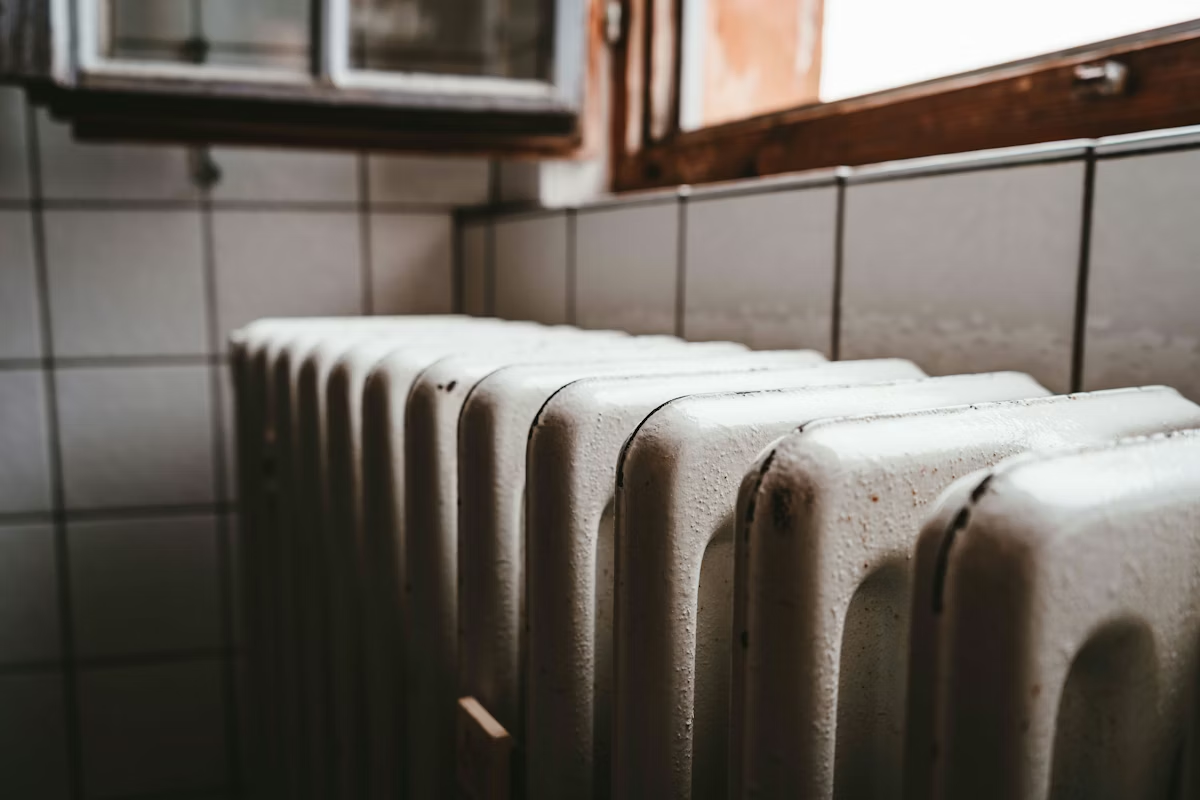
Thermostatic Radiator Valves — or TRVs — are the numbered valves fitted to the side of individual radiators. They allow you to control the temperature of each room independently, rather than heating every room to the same level.
How TRVs Work
TRVs sense the air temperature in the room and automatically reduce or cut off the flow of hot water to the radiator once the desired temperature is reached. The numbers on the valve (typically 1–5) correspond to approximate temperatures:
- 1 — Around 10°C (frost protection only)
- 2 — Around 16°C (suitable for hallways or spare rooms)
- 3 — Around 20°C (standard living temperature)
- 4 — Around 23°C
- 5 — Maximum (fully open)
Tips for Using TRVs Effectively
- Set TRVs lower in rooms you use less frequently
- Don’t cover TRVs with curtains or furniture — they need to sense the room air accurately
- Keep the TRV in the room where the main thermostat is located fully open, so the thermostat remains in control
- TRVs are not a substitute for a room thermostat — they work best alongside one
If your radiators still have old manual valves (no numbers, just open/closed), upgrading to TRVs is a relatively low-cost improvement that can deliver meaningful savings.
Winter Tips: Don’t Let Your Home Get Too Cold
While it’s tempting to turn the heating off entirely when you’re away or during milder spells, letting your home drop below 12°C carries real risks — particularly during cold snaps.
The Risk of Frozen Pipes
When temperatures inside walls and under floors drop low enough, water in your pipes can freeze and expand, causing pipes to crack or burst. A burst pipe can cause thousands of pounds of damage to your home.
To protect against this:
- Set your thermostat to a frost protection setting (usually around 7–12°C) when the house is empty for extended periods
- Many smart thermostats have a dedicated frost protection mode
- If you’re going away in winter, ask a neighbour to check the property or leave the heating on a low setting
- Know where your stopcock is in case you need to turn off the water quickly
Other Winter Considerations
- Bleed your radiators at the start of the heating season to remove trapped air and improve efficiency
- Check that your boiler has been serviced within the last 12 months
- Use draught excluders on doors and windows to retain heat and reduce the load on your heating system
Get a Professional Heating Assessment
If you’ve applied these tips and your heating bills are still higher than expected, it may be time to have your heating system professionally assessed. An engineer can check your boiler efficiency, identify any issues with your controls, and recommend upgrades that could save you money in the long run.