Why Draughts Are Costing You Money
If your home feels chilly even with the heating on, draughts could be the culprit. Unwanted gaps around doors, windows, floors, and fireplaces allow cold air to pour in and warm air to escape — and that means your boiler has to work harder to keep your home comfortable.
According to the Energy Saving Trust, draught-proofing is one of the cheapest and most effective ways to reduce your energy bills. Poorly sealed homes can lose up to 20% of their heat through gaps and cracks. For the average UK household, that translates to tens of pounds wasted every year — money that could stay firmly in your pocket.
The good news? Most draught-proofing jobs are straightforward DIY tasks that cost very little and can be completed in a weekend. This room-by-room guide walks you through everything you need to know.
How to Identify Draughts in Your Home
Before you start sealing gaps, it helps to know exactly where the cold air is getting in. There are two simple methods you can use:
The candle test: On a windy day, light a candle and slowly move it around the edges of doors, windows, skirting boards, and floorboards. If the flame flickers or blows sideways, you’ve found a draught.
The feel test: Simply run your hand slowly around door and window frames, letterboxes, keyholes, and skirting boards. You’ll often be able to feel a cold stream of air without any equipment at all.
Make a note of every draught you find — even small ones add up. Once you’ve done your survey, work through each area systematically using the guidance below.
Draught-Proofing Doors
External doors are one of the biggest sources of heat loss in a typical UK home. Gaps around the frame, under the door, and through the letterbox all let cold air in.
Products to use:
- Brush strips or compression seals — fitted to the door frame to seal the sides and top. Available in self-adhesive or screw-fix versions.
- Draught excluder threshold strips — fitted to the bottom of the door to seal the gap at floor level. Brush strips are the most durable option.
- Letterbox draught excluders — a brush or flap fitted inside the letterbox opening to block cold air.
- Keyhole covers — a small escutcheon plate that swings over the keyhole when not in use.
Costs: Brush strips typically cost £5–£15 per door. A letterbox excluder costs around £5–£10. A full door draught-proofing kit can be bought for as little as £10–£20.
DIY difficulty: ⭐ Easy — most products are self-adhesive or require only a screwdriver.
Expected savings: The Energy Saving Trust estimates that draught-proofing all external doors and windows together can save around £45–£60 per year on energy bills.
Don’t forget internal doors too — particularly those leading to unheated spaces like garages, utility rooms, or loft hatches.
Draught-Proofing Windows
Windows — especially older single-glazed or timber-framed ones — are notorious for letting in cold air around their edges. Even double-glazed windows can develop gaps over time as frames warp or seals deteriorate.
Products to use:
- Self-adhesive foam strips — the cheapest and easiest option, pressed into the gap between the window frame and the opening sash. Best for irregular gaps.
- Brush strips — more durable than foam and better suited to sliding sash windows where the two sashes rub together.
- Secondary glazing film — a clear plastic film applied to the inside of the window frame using double-sided tape and shrunk tight with a hairdryer. Provides excellent draught-proofing and some insulation benefit.
- Professional secondary glazing panels — a more permanent solution involving a second pane of glass or acrylic fitted inside the existing frame. More expensive but highly effective.
Costs: Self-adhesive foam strips cost as little as £2–£5 per window. Brush strips are £5–£10. Secondary glazing film kits start at around £10–£15 per window.
DIY difficulty: ⭐ Easy (foam and film) to ⭐⭐ Moderate (brush strips on sash windows).
Expected savings: Draught-proofing windows contributes to the combined saving of £45–£60 per year alongside doors, and can make a noticeable difference to comfort levels in draughty rooms.
Floors
Floorboards — particularly in older Victorian and Edwardian homes — can develop significant gaps between the boards as the timber shrinks and moves over the years. Cold air rises through these gaps from the sub-floor void below, making rooms feel cold even when the heating is running.
Products to use:
- Flexible filler or decorator’s caulk — squeezed into gaps between floorboards and smoothed flush. Works well for small, consistent gaps.
- Wooden slivers or beading — for larger gaps, thin strips of wood can be glued and tapped into place, then sanded flush.
- Skirting board sealant — a bead of flexible caulk applied along the join between the skirting board and the floor seals the gap where cold air often enters from the wall cavity.
Costs: A tube of flexible filler costs around £3–£6. Decorator’s caulk is similarly priced. Wooden beading is inexpensive and available from any DIY store.
DIY difficulty: ⭐⭐ Moderate — filling floorboard gaps requires patience and a steady hand, but no specialist skills.
Expected savings: The Energy Saving Trust estimates that draught-proofing floors can save around £30–£40 per year for a typical semi-detached home with suspended timber floors.
Fireplaces
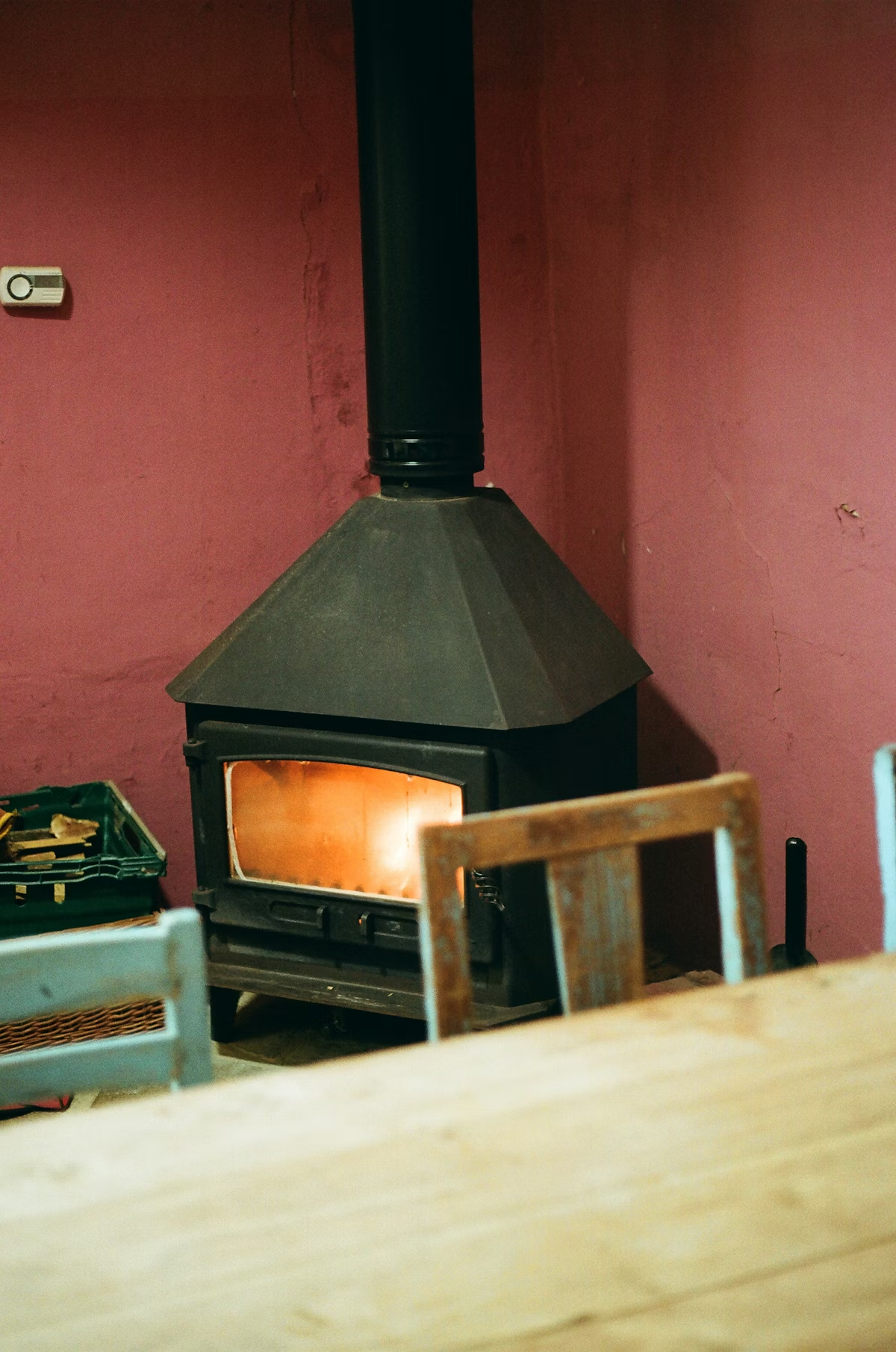
An open fireplace — even one that’s no longer in use — acts like a giant hole in your wall. Warm air rises up the chimney and cold air is drawn in to replace it, creating a constant draught through the room.
Products to use:
- Chimney balloon (or chimney draught excluder) — an inflatable device that sits inside the chimney flue just above the fireplace opening. It blocks the flow of air while remaining easy to remove when you want to use the fire. Most come with a reminder tag that hangs down into the fireplace so you don’t accidentally light a fire with the balloon in place.
- Fireplace draught excluder cushion — a fabric cushion filled with insulating material, placed in the fireplace opening. Less effective than a balloon but very easy to use.
Costs: Chimney balloons cost around £15–£25 depending on flue size. Draught excluder cushions are available from around £10.
DIY difficulty: ⭐ Easy — chimney balloons are inflated by mouth or with a pump and require no tools.
Expected savings: Sealing an unused chimney can save around £65–£90 per year according to the Energy Saving Trust — making it one of the most cost-effective draught-proofing measures available.
Loft Hatches
The loft hatch is often overlooked, but it can be a significant source of heat loss. Most loft hatches are simply a piece of board sitting in a frame with no seal — meaning warm air from the room below escapes freely into the cold loft space above.
Products to use:
- Foam or rubber compression seal — applied around the frame of the loft hatch, just like a door seal, to create an airtight close when the hatch is shut.
- Loft hatch insulation board — a rigid insulation panel fixed to the top of the hatch door to reduce heat loss through the hatch itself, in addition to sealing the edges.
Costs: A foam seal strip costs £3–£8. Insulation boards for loft hatches are available from around £15–£30.
DIY difficulty: ⭐ Easy — applying a compression seal is a simple self-adhesive job.
Expected savings: Draught-proofing and insulating the loft hatch can save around £20–£30 per year, and it takes less than an hour to do.
Summary and Final Tips
Draught-proofing is one of the best-value home improvements a UK homeowner can make. The materials are cheap, the work is well within DIY reach, and the savings add up quickly — especially when you tackle multiple areas of the home at once.
Here’s a quick recap of the key actions:
- Seal external doors with brush strips and threshold strips
- Fit a letterbox excluder and keyhole cover
- Apply foam or brush strips to draughty windows
- Fill floorboard gaps and seal skirting boards
- Install a chimney balloon in unused fireplaces
- Seal and insulate your loft hatch
For the best results, do a thorough draught survey first using the candle or feel test, then work through each area systematically. Combined, these measures could save you well over £150 per year on your energy bills — and your home will feel noticeably warmer and more comfortable from day one.
If you’re unsure about any aspect of draught-proofing, or if you suspect more significant issues such as failing window seals or structural gaps, it’s always worth getting a professional assessment. A qualified tradesperson can identify problems that aren’t always visible to the naked eye and recommend the most effective solutions for your property.