As temperatures drop and storms roll in across the UK, your roof becomes your home’s first line of defence against the elements. A little preparation in autumn can save you from costly emergency call-outs mid-winter. Here’s a practical guide to getting your roof winter-ready — tailored for British homes and the damp, unpredictable climate we face each year.
1. Clear Your Gutters and Downpipes
Blocked gutters are one of the most common causes of winter roof damage in the UK. Fallen leaves, moss, and debris accumulate throughout autumn, preventing rainwater from draining away properly. With UK rainfall levels consistently high — particularly in the North, Wales, and Scotland — backed-up gutters can quickly cause water to seep under tiles or slates, rot fascia boards, and lead to damp penetrating inside your home.
Before winter arrives, clear all gutters and downpipes of debris. Check that water flows freely by running a hose along the gutter and watching for blockages or overflow. If you spot any sagging sections or cracks, have them repaired or replaced before the first frost.
2. Check and Replace Damaged Tiles or Slates
Cracked, slipped, or missing tiles or slates leave your roof deck exposed to rain, wind, and frost. Even a single damaged tile can allow water ingress that spreads quickly through the roof structure, causing timber rot and internal damp. This is a particular concern during British winters, when prolonged wet spells and freeze-thaw cycles place roofing materials under significant stress.
Carry out a visual inspection from the ground using binoculars, or arrange for a qualified roofer to carry out a safe inspection from above. In line with BS 5534 — the British Standard for slating and tiling — all roof coverings should be properly fixed and capable of withstanding wind uplift. Look for:
- Cracked or broken tiles or slates
- Tiles or slates that have slipped out of position
- Gaps where tiles or slates are missing entirely
- Moss or lichen growth, which can lift tiles and slates over time and accelerate deterioration in the UK’s damp climate
Replace any damaged tiles or slates promptly. It’s a relatively low-cost repair — often no more than a few hundred pounds — that can prevent far more expensive structural damage down the line. If you’re replacing a significant area of roofing, check whether building regulations approval is required; your local council’s building control department can advise.
3. Inspect Flashing Around Chimneys and Skylights
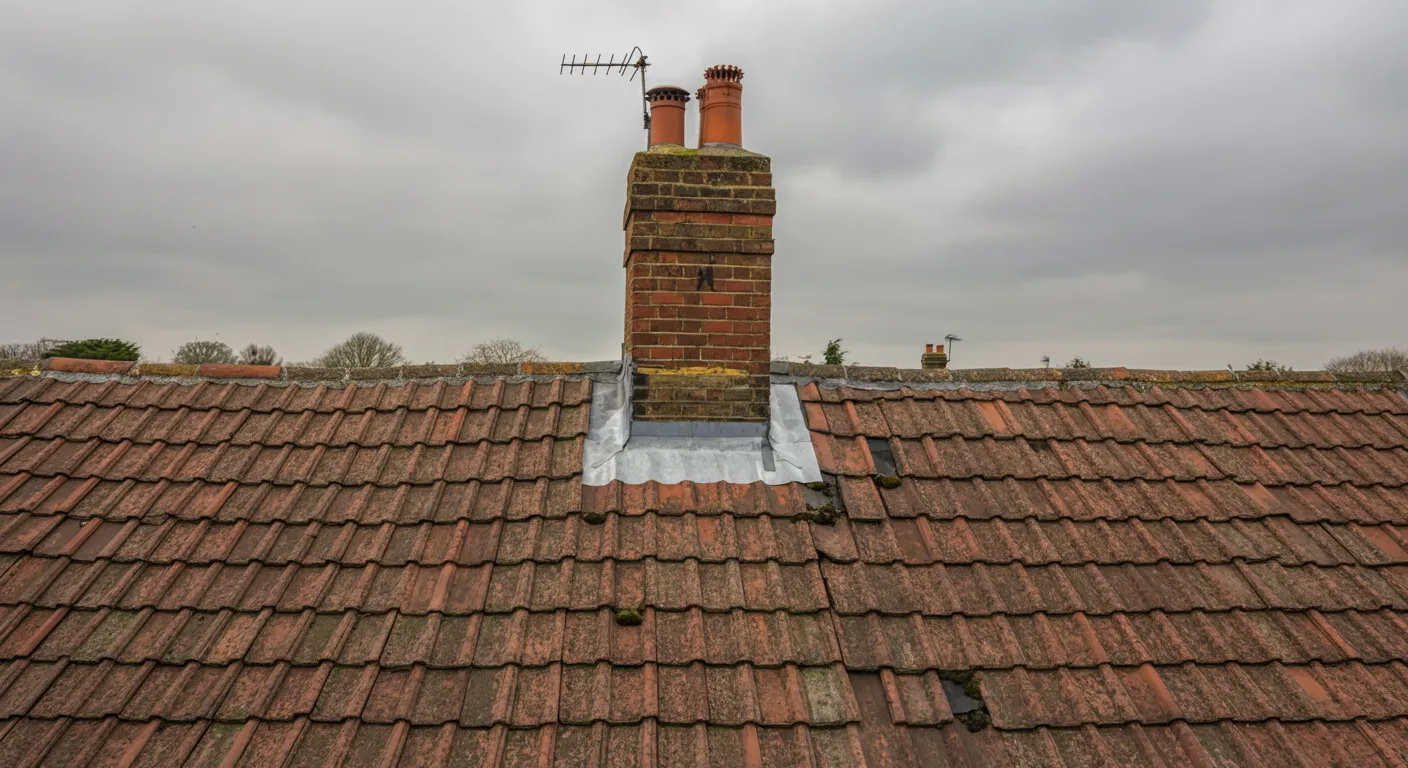
Flashing is the thin metal — usually lead or aluminium — that seals the joints between your roof and vertical structures such as chimneys, skylights, and dormer walls. It’s one of the most vulnerable points on any roof and a common source of leaks, particularly in older British properties.
Over time, flashing can lift, crack, or pull away from the mortar that holds it in place. The freeze-thaw cycles common during British winters accelerate this deterioration significantly. Check for:
- Lifted or buckled sections of flashing
- Cracked or crumbling mortar around chimney flashings
- Rust staining or corrosion on metal flashing
- Water stains on ceilings or walls near chimneys or skylights inside the property
Repointing or replacing flashing is a job best left to a qualified roofer, as working at height around chimneys carries significant safety risks. Note that replacing lead flashing on a listed building or in a conservation area may require planning permission — always check with your local council before proceeding.
4. Check Your Loft Insulation
Adequate loft insulation plays a dual role in winter roof health. First, it keeps your home warmer and reduces heating bills — particularly important given the UK’s rising energy costs. Second, and perhaps less obviously, it helps prevent ice dams — a phenomenon where heat escaping through a poorly insulated roof melts snow, which then refreezes at the eaves and forces water back under the tiles or slates.
The recommended depth for loft insulation in the UK is at least 270mm of mineral wool, in line with current building regulations guidance. While you’re up there, also check for:
- Signs of damp or mould on the roof timbers — a common issue in the UK’s humid climate
- Daylight visible through the roof (a clear sign of gaps or missing tiles or slates)
- Any existing water staining on the felt underlay or timbers
- Insulation that has compressed, shifted, or become damp and ineffective
Topping up or replacing loft insulation is a cost-effective improvement that pays for itself quickly through reduced energy bills. You may also be eligible for government grants or schemes such as the Great British Insulation Scheme — worth checking before you pay out of pocket.
5. Book a Professional Pre-Winter Roof Inspection
Even if your roof looks fine from the ground, a trained roofer can spot early warning signs that are invisible to the untrained eye. A professional inspection typically covers the full roof surface, ridge tiles, valleys, guttering, flashing, and the condition of the felt underlay where accessible.
Booking an inspection in early autumn — before the worst of the British weather arrives — gives you time to arrange any necessary repairs without the pressure of an emergency. It also means you’re not competing for a roofer’s time during the busy winter period when demand spikes following storms and heavy rainfall.
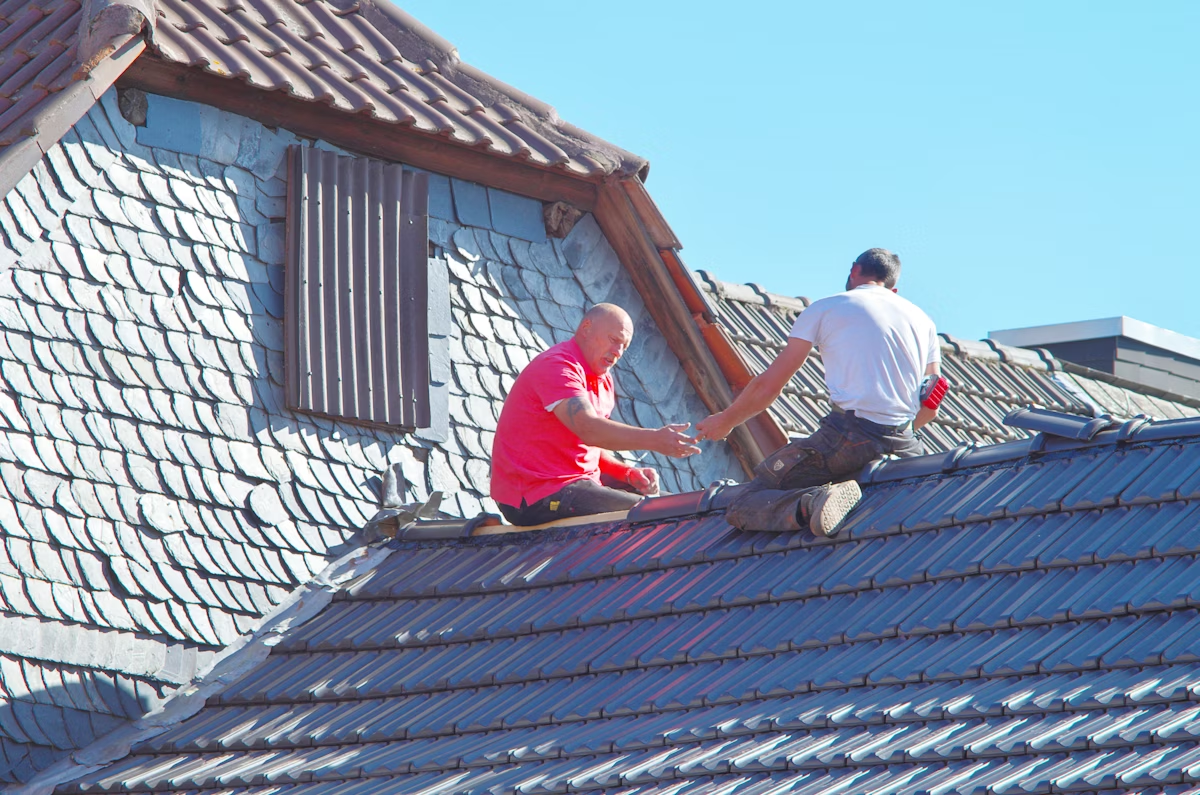
Always look for a roofer who is a registered member of the National Federation of Roofing Contractors (NFRC) — the UK’s leading roofing trade body. NFRC members are vetted for quality, hold appropriate insurance, and work to recognised industry standards including BS 5534. Always obtain at least two or three written quotes before committing to any significant work.
Don’t Wait Until It’s Too Late
Roof repairs are almost always cheaper when caught early. A cracked tile or slate costs a fraction of what you’ll pay to fix the water damage it causes if left unattended through a wet British winter. Taking a few hours to prepare your roof now could save you hundreds — or even thousands — of pounds in emergency repairs.
Use the button below to find a local, qualified roofer in your area who is a member of the NFRC. They can carry out a thorough pre-winter inspection and any repairs needed to keep your home protected through the months ahead.